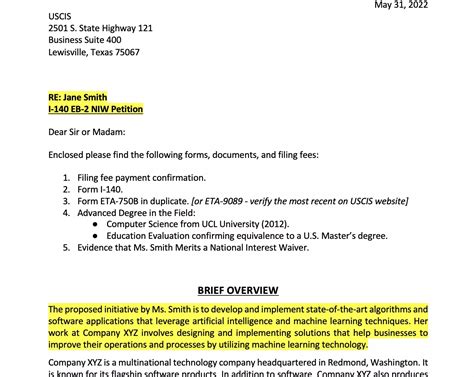
Unlock EB-2 NIW: USCIS Policy Manual SimplifiedHey there, future innovators and exceptional professionals! Ever found yourself scratching your head over the complexities of U.S. immigration law, especially when it comes to the
EB-2 National Interest Waiver
? You’re definitely not alone, guys. This particular visa category, known as EB-2 NIW, can feel like a labyrinth, but trust me, understanding the
USCIS Policy Manual
is your golden thread. This comprehensive guide from U.S. Citizenship and Immigration Services (USCIS) is the bedrock for how these petitions are adjudicated. It’s not just a dry legal text; it’s the rulebook, the blueprint, the go-to source that explains exactly what USCIS officers look for when deciding if your work is truly in the
national interest
. Our goal today is to demystify this critical manual, breaking down its most important aspects, particularly the infamous
Matter of Dhanasar
precedent decision, and offering practical, human-friendly advice so you can navigate your EB-2 NIW journey with confidence. We’ll dive deep into what makes an EB-2 NIW petition successful, focusing on the specific criteria and evidence that truly resonate with USCIS adjudicators. By the end of this article, you’ll have a much clearer picture of how to present your unique contributions as a benefit to the United States, positioning yourself for a potentially life-changing outcome. So, let’s roll up our sleeves and get started on understanding the
USCIS Policy Manual
and what it means for your
EB-2 NIW
aspirations.## What Exactly is the EB-2 National Interest Waiver (NIW)?Before we plunge into the specifics of the
USCIS Policy Manual
, let’s get on the same page about what the
EB-2 National Interest Waiver (NIW)
actually is. Essentially, the EB-2 visa category is for professionals holding advanced degrees (like a master’s, Ph.D., or a bachelor’s degree plus five years of progressive experience) or individuals demonstrating exceptional ability in their field. Think scientists, researchers, artists, business professionals, and educators who have achieved a significant level of expertise well beyond what’s ordinarily encountered. What makes the
NIW
so incredibly special, however, is the “waiver” part. Typically, for most employment-based green cards, you need a job offer from a U.S. employer, and that employer has to go through a rigorous process called PERM labor certification. This process involves proving that there are no qualified U.S. workers available for the position, which can be time-consuming and complex, not to mention a significant hurdle if you’re trying to self-petition or you’re an entrepreneur. But with the
National Interest Waiver
,
this requirement is waived
. Yep, you heard that right! If your work is deemed to be in the national interest of the United States, you can actually self-petition for a green card without a specific job offer or PERM certification. This is a game-changer for many highly skilled individuals who might not have a traditional employer-sponsored path. The underlying principle is simple: if your work brings such significant benefits to the U.S. that it outweighs the protection of U.S. jobs through PERM, then the waiver is granted. This could be in areas like public health, economic development, scientific research, education, or cultural enrichment. It’s designed to attract and retain individuals whose contributions are so vital that the usual labor market test isn’t necessary. Understanding the core definition of
EB-2 NIW
is the first step in appreciating why the
USCIS Policy Manual
is so crucial. It’s because the manual provides the detailed, authoritative interpretation of what “national interest” truly means and how an applicant can demonstrate it effectively. It’s not just about having an advanced degree; it’s about proving your work’s substantial merit and national importance, and showing that you are uniquely positioned to advance it. This path offers immense flexibility, allowing highly talented individuals to pursue their endeavors without the constraints of a specific employer, truly empowering them to contribute on their own terms. It’s an exciting opportunity for many, but one that demands a deep understanding of the guidelines.## Unpacking the USCIS Policy Manual: The Dhanasar FrameworkNow, let’s get into the nitty-gritty of the
USCIS Policy Manual
itself, specifically its guidance on the
EB-2 NIW
. For anyone serious about pursuing this green card category, understanding the precedent decision
Matter of Dhanasar
is absolutely non-negotiable. This decision, issued by the Administrative Appeals Office (AAO) in 2016, revolutionized how NIW petitions are evaluated and forms the very core of the
USCIS Policy Manual’s
instructions for adjudicators. Before
Dhanasar
, the criteria were somewhat ambiguous, leading to inconsistent decisions.
Dhanasar
clarified and streamlined the process by establishing a clear, three-prong test that every EB-2 NIW petitioner must satisfy. Think of these three prongs as the pillars supporting your entire application, and each must be addressed thoroughly with compelling evidence.The first prong asks whether
the foreign national’s proposed endeavor has both substantial merit and national importance
. This is where you, guys, really need to shine a light on what you do. “Substantial merit” isn’t just about your individual achievements; it’s about the inherent value of your work itself. Are you researching a cure for a major disease? Developing innovative renewable energy solutions? Creating educational programs that benefit underserved communities? Founding a startup that generates significant economic growth and jobs? The impact doesn’t have to be monetary; it can be scientific, cultural, artistic, or educational. You need to articulate
why
your endeavor is significant. “National importance,” on the other hand, means the scope of your endeavor’s impact extends beyond a local level. While a local project can certainly have national implications, USCIS wants to see that the potential benefits reach across state lines or have a broader societal impact. For instance, a groundbreaking medical discovery could start in a lab, but its implications for public health would be nationally important. Even an endeavor that is
primarily local
could be nationally important if the proposed impact is so broad that it has a national effect, or if the field of endeavor is one that has national importance. Think about how your work could inspire others, create new methodologies, or address critical national challenges.The second prong requires that
the foreign national is well-positioned to advance the proposed endeavor
. This is all about proving
your capability
to successfully execute your proposed plan. USCIS will look at a range of factors here, including your education, skills, knowledge, and a track record of success in similar or related endeavors. Do you have publications in reputable journals? Patents to your name? Awards or accolades from professional organizations? Letters of recommendation from independent experts in your field are incredibly powerful here, as they provide objective validation of your expertise and potential. Have you led successful projects or teams? Do you have business plans or funding secured for your venture? USCIS wants to be convinced that you possess the unique qualities and resources necessary to bring your proposed endeavor to fruition. This isn’t just about your potential; it’s about your demonstrated ability and preparedness. Think about demonstrating a pattern of success, showing a progression in your career, and articulating a clear, feasible plan for your future work in the U.S. This section is where you connect your past achievements directly to your future plans and show you’re not just
capable
, but
uniquely suited
to achieve what you propose.Finally, the third prong, often the trickiest, asks that
on balance, it would be beneficial to the United States to waive the requirements of a job offer and thus of a labor certification
. This is the core “waiver” justification. It’s not enough to simply have an important project and be good at it; you must convince USCIS that the national interest outweighs the statutory requirement of a job offer and labor certification. This prong typically involves showing that your contributions are so urgent or unique that imposing the PERM process would actually harm the national interest by delaying or preventing your critical work. Perhaps your skills are in short supply, or your project addresses an immediate national need. It’s about arguing that the
benefit of your immediate contribution
outweighs the benefit of having a U.S. employer test the labor market. This prong often requires a strong narrative explaining why your work is exceptional and why requiring a labor certification would be impractical or detrimental. For example, if you are a self-employed entrepreneur creating new technologies and jobs, finding an employer to conduct PERM would be impossible. Similarly, if your research is at the forefront of a critical field and time is of the essence, the delay of PERM could be seen as counterproductive to the national interest. Successfully addressing all three
Dhanasar
prongs, meticulously supported by robust evidence, is the key to unlocking your
EB-2 NIW
approval. The
USCIS Policy Manual
serves as the authoritative interpretation of these prongs, guiding adjudicators and providing a clear framework for petitioners to follow.## Navigating the Application: Essential Strategies for a Successful EB-2 NIW PetitionAlright, now that we’ve thoroughly dissected the
Dhanasar
framework from the
USCIS Policy Manual
, let’s talk practicalities, guys. Successfully navigating the
EB-2 NIW application process
isn’t just about meeting the legal criteria; it’s about presenting your case in a compelling, clear, and thoroughly documented manner. Think of your petition as telling a powerful story—your story—of why you are an invaluable asset to the United States. The evidence you gather and how you articulate your contributions are absolutely critical.First and foremost,
evidence is king
. USCIS wants to see objective proof for every claim you make. This means gathering a wide array of documents, not just a few. For educational qualifications, provide diplomas, transcripts, and any professional licenses. If you’re relying on “exceptional ability,” you’ll need extensive documentation of your expertise. This can include evidence of major awards, memberships in prestigious associations, published materials by or about you in major media, participation as a judge of others’ work, original scientific or scholarly contributions, and evidence of high salary or other remuneration. Beyond these standard categories, think creatively about how to demonstrate the “substantial merit and national importance” of your endeavor. Have you secured grants? Collaborated with government agencies? Received media attention for your work? Each piece of evidence should directly support one or more of the
Dhanasar
prongs. Another vital component of your evidence package will be your
letters of recommendation
, sometimes called support letters. These aren’t just polite endorsements; they are crucial third-party validations of your expertise and the significance of your work. Seek letters from
independent experts
in your field, preferably those who haven’t worked directly under you or are not personal friends. These individuals should be able to articulate, in detail, how your work has impacted their field, how you are uniquely qualified to advance your proposed endeavor, and why your contributions are of national importance. A strong recommendation letter doesn’t just praise you; it cites specific achievements, explains the broader implications of your work, and directly addresses the
Dhanasar
criteria. Encourage your recommenders to use concrete examples and avoid generic statements.The
petition letter
itself, prepared by you or your attorney, is your narrative masterpiece. This document is where you tie all your evidence together into a coherent and persuasive argument. It should meticulously address each of the three
Dhanasar
prongs, with explicit references to the supporting exhibits. Use clear, concise language, avoiding jargon where possible, or explaining it clearly if necessary. The petition letter should leave no doubt in the adjudicator’s mind that you meet all the requirements. It’s your opportunity to explain the context of your work, the impact it has, and your unique qualifications. Structure it logically, perhaps dedicating a section to each
Dhanasar
prong, and ensure a strong, compelling introduction and conclusion.Finally, be aware of
common pitfalls
to avoid. One major mistake is providing insufficient evidence or evidence that doesn’t directly link to the
Dhanasar
criteria. Don’t just list achievements; explain their significance and how they fulfill the
USCIS Policy Manual
requirements. Another pitfall is a weak or generic petition letter that fails to tell a persuasive story or neglects to explicitly address all three prongs. Also, ensure your
proposed endeavor
is clearly defined and consistent throughout your application. Vague plans will not cut it. Over-reliance on personal testimony without external validation is also a red flag. Remember, USCIS adjudicators are looking for objective evidence and expert opinions, not just your own self-assessment. Paying close attention to these details and meticulously preparing your petition will significantly increase your chances of a successful
EB-2 NIW
outcome. Investing time in understanding these strategies, informed by the
USCIS Policy Manual
, is truly an investment in your future.## Is the EB-2 NIW Right for You? Exploring Eligible Professions and BenefitsSo, who exactly is the
EB-2 National Interest Waiver (NIW)
designed for, and what are the major benefits that make it such an appealing option for so many talented individuals? Let’s break it down, guys. The truth is, the
EB-2 NIW
is incredibly broad in its applicability, welcoming professionals from a vast array of fields, as long as they can demonstrate their work’s
substantial merit and national importance
and their own
unique positioning to advance it
, as per the
USCIS Policy Manual
. We’re talking about individuals who are not just good at what they do, but who are truly exceptional and whose work promises significant contributions to the U.S. national interest.Think about
researchers and scientists
developing new technologies, finding cures for diseases, or advancing our understanding of the universe. Medical professionals, especially those working in underserved areas or specializing in critical public health initiatives, often find a strong path through NIW.
Engineers
designing innovative infrastructure, sustainable energy solutions, or cutting-edge software are also prime candidates.
Entrepreneurs and business leaders
who are launching startups that create jobs, foster economic growth, or introduce novel products and services can also make a very compelling case. Even
artists, musicians, and cultural figures
whose work significantly enriches American culture or preserves important traditions can be eligible if they demonstrate national impact. Educators, particularly those working on significant curriculum development or in critical shortage areas, can also qualify. The key here isn’t a specific job title, but the
impact
and
importance
of your work. If you’re pushing boundaries, solving problems, or bringing unique value that benefits the nation as a whole, then the EB-2 NIW might very well be your path.The benefits of pursuing an
EB-2 NIW
are substantial and often life-changing. Perhaps the most significant advantage, as we discussed, is the
ability to self-petition
. This means you don’t need a specific job offer from a U.S. employer. This is huge for entrepreneurs, independent researchers, consultants, or anyone whose work doesn’t fit neatly into a traditional employer-employee relationship. It grants you incredible flexibility and autonomy in your career path within the U.S. You’re not tied to one company or one role, allowing you to pursue projects that truly align with your goals and maximize your potential contribution. Secondly, by
waiving the PERM labor certification process
, the NIW saves a significant amount of time and avoids the complex requirements associated with proving a lack of qualified U.S. workers. The PERM process alone can add many months, if not over a year, to the green card application timeline. Bypassing this step can significantly expedite your journey to permanent residency. Additionally, because you are self-petitioning, you maintain greater control over your application. While legal counsel is highly recommended to ensure compliance with the
USCIS Policy Manual
, you are the driving force behind your petition, allowing you to highlight your achievements and future plans most effectively. This flexibility, coupled with a potentially faster processing time compared to other employment-based categories, makes the
EB-2 NIW
an incredibly attractive option for highly skilled individuals who are poised to make a significant positive impact on the United States. If your work aligns with these criteria, exploring the EB-2 NIW is definitely a worthwhile endeavor.## Staying Ahead: Understanding Processing Times and Future Changes in EB-2 NIW PolicyKeeping an eye on
processing times
and potential
future changes
in
EB-2 NIW policy
is a smart move for anyone considering or currently undergoing the application process. While the
USCIS Policy Manual
provides the foundational guidelines, the actual time it takes for a petition to be adjudicated can fluctuate significantly. These variations are influenced by factors like the current workload at USCIS service centers, the volume of applications received, and the specific adjudicator handling your case. USCIS provides estimated processing times on its website, which are updated regularly, and it’s always a good idea to check these. However, remember these are
estimates
, guys, and individual cases can vary. Sometimes, a well-prepared, clear, and thoroughly documented petition, one that directly addresses all aspects of the
Dhanasar
framework from the
USCIS Policy Manual
, might sail through relatively quickly. Other times, even strong cases might face delays due to Requests for Evidence (RFEs) or general backlogs. It’s important to prepare for potential delays and maintain patience throughout the process.Beyond processing times,
immigration policy
is not static. It can evolve with new administrations, legislative changes, or even updated interpretations from USCIS itself. While the
Matter of Dhanasar
decision has provided a stable framework for the
EB-2 NIW
, there can always be subtle shifts in how adjudicators are instructed to interpret evidence or assess “national importance” and “substantial merit.” For example, during public health crises, certain fields like epidemiology or vaccine research might be given additional emphasis, reflecting current national priorities. Conversely, changes to fee structures, premium processing availability, or even the overall tone of immigration enforcement can impact the experience of petitioners. USCIS regularly updates its Policy Manual and publishes stakeholder engagement summaries, which are excellent resources for staying informed. Subscribing to USCIS news alerts or consulting regularly with an experienced immigration attorney are highly recommended strategies to stay abreast of any significant developments. An attorney specializing in
EB-2 NIW
will not only understand the nuances of the current
USCIS Policy Manual
but will also be monitoring the landscape for any shifts that could affect your petition. Their expertise can be invaluable in anticipating challenges, adapting your strategy, and ensuring your application remains compliant with the latest guidelines. Staying informed means being proactive, allowing you to submit the strongest possible petition and adjust course if necessary, ensuring your journey to a green card is as smooth as possible in an ever-changing immigration landscape.## ConclusionPhew! We’ve covered a lot of ground today, unraveling the intricacies of the
USCIS Policy Manual
and its profound impact on the
EB-2 National Interest Waiver
. Hopefully, guys, you now feel much more confident about approaching this unique and incredibly valuable pathway to permanent residency in the United States. We’ve seen that the
EB-2 NIW
is a fantastic opportunity for individuals with advanced degrees or exceptional abilities whose work significantly benefits the U.S. national interest, freeing them from the typical job offer and labor certification requirements.The
Matter of Dhanasar
precedent decision, with its clear three-prong test –
substantial merit and national importance
, being
well-positioned to advance the endeavor
, and the
benefit to the U.S. of waiving the labor certification
– stands as the cornerstone of every successful NIW petition. Remember, your job is to meticulously gather evidence, craft a compelling narrative in your petition letter, and secure strong, independent letters of recommendation, all directly addressing these three crucial criteria. We also explored who benefits most from this category, from pioneering scientists and innovative entrepreneurs to dedicated medical professionals and impactful educators, highlighting the flexibility and self-petitioning advantages. While the
USCIS Policy Manual
provides the rules, understanding current processing trends and remaining vigilant about potential policy updates are also key elements of a proactive approach. Ultimately, your journey through the
EB-2 NIW
process, guided by the principles laid out in the
USCIS Policy Manual
, is about clearly articulating the immense value you bring to the United States. It’s a challenging but deeply rewarding path. If you believe your contributions align with the requirements, don’t hesitate to seek out qualified legal counsel. An experienced immigration attorney can provide personalized guidance, help you strengthen your case, and navigate the nuances of the
USCIS Policy Manual
, significantly enhancing your chances of success. Your unique talent is an asset, and the
EB-2 NIW
could be your bridge to continuing that impactful work right here in the U.S. Go for it!
