Indonesia Vehicle Plates: Guide to Registration\n\nHey guys, have you ever found yourself wondering about those unique number plates on vehicles in Indonesia? Whether you’re a local or an expatriate, understanding the ins and outs of an
Indonesia Vehicle Registration Plate
is super important. These aren’t just random numbers and letters; they’re a crucial part of identifying a vehicle, its ownership, and ensuring legal compliance on the bustling streets of Indonesia. From motorcycles zipping through traffic to family cars navigating the urban sprawl, every single vehicle carries a story on its plate, denoting its origin, type, and legal status. This comprehensive guide is designed to unravel all the mysteries surrounding
Indonesian license plates
, making the often-complex world of vehicle registration straightforward and easy to grasp for everyone. We’ll dive deep into everything from the basic structure of the plates to the intricate processes of vehicle registration and renewal, ensuring you’re well-equipped with all the knowledge you need. Getting your head around these details isn’t just about following the law; it’s about being a responsible vehicle owner and contributing to safer, more organized roads. So, let’s get ready to decode the world of
Indonesia Vehicle Registration Plate
together, shall we?\n\n## Understanding Indonesian Vehicle Registration Plates\n\nSo, what exactly are
Indonesian vehicle registration plates
? At its core, an
Indonesia Vehicle Registration Plate
, often simply called a license plate, is a unique identifier issued by the Indonesian National Police (Polri) for every motor vehicle operating within the country. These plates, officially known as
Tanda Nomor Kendaraan Bermotor
(TNKB), are much more than just a piece of metal or plastic. They serve as the primary visual proof of a vehicle’s legal registration and compliance with national regulations. Every plate is meticulously structured to convey specific information, including the vehicle’s regional origin, its registration number, and the year of its registration validity. This system ensures that each vehicle can be traced and verified, which is absolutely vital for law enforcement, taxation, and maintaining public order on the roads. \n\nHistorically, the concept of vehicle identification in Indonesia has evolved significantly. From simpler systems in the colonial era to the more sophisticated digitalized methods of today, the goal has always remained the same: to provide clear and unambiguous identification. The current system, while seemingly complex at first glance, is a well-established framework that has been refined over decades to handle the sheer volume of vehicles in this sprawling archipelago.
Understanding Indonesia vehicle registration plate
means grasping that it’s an integral part of the country’s administrative and security infrastructure. It’s not just about aesthetics; it’s about legality, accountability, and safety. Each plate is linked to a
Surat Tanda Nomor Kendaraan
(STNK), which is the vehicle registration certificate, and a
Buku Pemilik Kendaraan Bermotor
(BPKB), the vehicle ownership book. Together, these documents form the complete legal profile of a vehicle, confirming who owns it, where it’s registered, and its technical specifications. Without a valid and properly displayed plate, a vehicle is essentially operating illegally, which can lead to hefty fines, confiscation, and other legal repercussions. Therefore, for any vehicle owner or prospective owner, a thorough understanding of these plates is not just helpful but
absolutely essential
for smooth and lawful operation in Indonesia. We’re talking about preventing headaches and keeping you on the right side of the law, guys, so pay attention! This foundational knowledge truly sets the stage for navigating the more detailed aspects of vehicle ownership in this vibrant nation.\n\n## Decoding Your Indonesian License Plate: Colors and Codes\n\nAlright, guys, let’s get down to the nitty-gritty of
decoding your Indonesian license plate
. These plates aren’t just a jumble of characters; they’re a carefully crafted code that tells a story about the vehicle. The first thing you’ll notice is the color scheme, which immediately tells you a lot about the vehicle’s purpose. Primarily, you’ll encounter a few distinct colors:
black plates with white lettering
, which are for private vehicles, the most common type you’ll see. Then there are
yellow plates with black lettering
, designating public transport vehicles like taxis, buses, and angkots (minibuses).
Red plates with white lettering
are reserved for government vehicles, indicating they belong to state institutions. You might also spot
white plates with red lettering
; these are temporary plates or those used for new vehicles before permanent registration. And for our international friends,
white plates with blue lettering
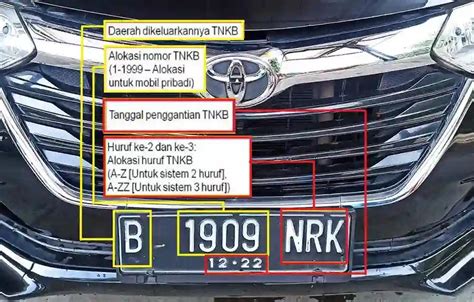
are for diplomatic vehicles. Each color serves a very specific purpose, allowing for quick visual identification by traffic authorities and the general public alike, highlighting the diverse functions vehicles serve within Indonesia’s dynamic transportation ecosystem. \n\nBeyond the colors, the alphanumeric sequence is where the real regional and identification details lie. Every
Indonesia vehicle registration plate
starts with one or two letters, which are the
regional codes
. For instance, a plate starting with ‘B’ indicates registration in Jakarta, ’D’ for Bandung, ‘L’ for Surabaya, ‘AG’ for Kediri, and so on. There are literally dozens of these codes covering every province and major city across Indonesia, giving you an immediate clue as to where a vehicle was originally registered. Following these regional letters, you’ll find a series of numbers, typically one to four digits. These are the vehicle’s unique registration numbers within that specific region. The lower the number, generally, the older the vehicle’s registration within that series. After the numbers, there’s usually another set of one or two letters. These
suffix letters
provide further specific identification, often indicating the vehicle type (e.g., car, motorcycle, truck) or the specific administrative area within the larger region. For example, ‘B 1234 ABC’ might mean a private vehicle (black plate) registered in Jakarta (‘B’), with registration number ‘1234’, and the ‘ABC’ might further categorize it. It’s a pretty clever system, trust me! Knowing these codes can be super helpful, not just for law enforcement but also for everyday situations, like identifying where a car that just cut you off might be from (just kidding… mostly!). But seriously, understanding these codes truly unlocks a deeper appreciation for the structure and order that underpins the
Indonesian vehicle registration system
. It’s a testament to the meticulous planning that goes into managing millions of vehicles across such a vast and populous nation, ensuring clarity and traceability for every single
Indonesian license plate
out there. This detailed insight into plate characteristics is fundamental for anyone looking to navigate Indonesia’s roads confidently and legally.\n\n## The Vehicle Registration Process in Indonesia: A Step-by-Step Guide\n\nNavigating the
vehicle registration process in Indonesia
can seem a bit daunting at first, but don’t worry, guys, it’s totally manageable once you understand the steps involved. Whether you’re registering a brand-new car, transferring ownership of a used vehicle, or just renewing your existing documentation, there’s a specific procedure to follow. The main objective here is to ensure your
Indonesia Vehicle Registration Plate
and its accompanying documents are always legal and up-to-date, preventing any unnecessary hassle with traffic authorities. Let’s break it down, step by step, focusing on the common scenarios you’ll likely encounter. \n\n
Registering a New Vehicle:
When you buy a brand-new vehicle, the dealership usually handles a significant portion of the initial registration for you, which is super convenient. However, it’s good to know what they’re doing. They will process the initial application for your
STNK
(Surat Tanda Nomor Kendaraan - Vehicle Registration Certificate) and
BPKB
(Buku Pemilik Kendaraan Bermotor - Vehicle Ownership Book), and obtain your
Indonesia Vehicle Registration Plate
. You’ll typically need to provide your ID card (KTP) and other personal details. Once the documents are ready, you’ll pick them up, along with your shiny new plates. Always double-check that all information—your name, address, vehicle details, and plate number—is accurate. \n\n
Transferring Vehicle Ownership:
This is a crucial step when buying or selling a used vehicle. The transfer of ownership, known as
balik nama
, ensures that the
BPKB
and
STNK
reflect the new owner’s details. The documents required typically include: the original STNK and BPKB, the old owner’s KTP, the new owner’s KTP, a bill of sale or purchase agreement, and a physical inspection of the vehicle (cek fisik) at the Samsat office (System Administrasi Manunggal Satu Atap – One-Stop Administration System for Traffic). This process changes the ownership record, making the
Indonesia Vehicle Registration Plate
officially linked to you. It’s
critical
to complete this transfer to avoid future legal complications, especially regarding taxes or if the vehicle is involved in an incident. \n\n
Renewing Your Vehicle Registration (STNK):
Your STNK needs to be renewed annually, and every five years, you’ll also get new *Indonesia Vehicle Registration Plate*s. For the annual renewal, you’ll typically need your original STNK, original KTP of the registered owner, and the vehicle itself for a quick check. This can often be done at a mobile Samsat unit, drive-thru Samsat, or online in some regions, making it relatively straightforward. For the five-year renewal, which involves getting new plates, a physical vehicle inspection at the main Samsat office is mandatory. You’ll also need to pay the annual vehicle tax and any outstanding fines.
Ignoring these renewals can lead to significant penalties, including fines and the risk of your vehicle being deemed illegal on the road.
So, mark your calendars, folks! Staying on top of your
vehicle registration process in Indonesia
is key to being a responsible and law-abiding vehicle owner. These steps, while requiring some attention to detail and paperwork, are designed to maintain order and legality on the roads, making the overall system robust and reliable for everyone involved in the transportation network.\n\n## Common Issues and Tips for Indonesian Vehicle Owners\n\nLet’s be real, guys, even with a clear understanding of the
Indonesia vehicle registration plate
system, you might still encounter a few bumps in the road.
Common issues
can range from lost documents to expired registrations, and knowing how to handle them is just as important as knowing the initial process. The goal here is to keep your vehicle legal and avoid any unnecessary stress or penalties. So, let’s talk about some of these typical challenges and, more importantly, share some practical tips to navigate them like a pro, ensuring your
Indonesian license plate
and all associated paperwork are always in tip-top shape. \n\nOne of the most frequent issues is a
lost or damaged STNK or BPKB
. Losing these crucial documents can be a real headache, as they are the legal proof of your vehicle’s registration and ownership. If this happens, don’t panic! You’ll need to report the loss to the police and obtain a lost report. With this report, your KTP, and potentially other supporting documents, you can apply for replacements at the Samsat office. It’s a bit of a process, involving verification and often a vehicle inspection, but it’s absolutely essential to get these replaced promptly. Operating a vehicle without its STNK is illegal and can lead to severe fines and even confiscation. \n\nAnother common oversight is
expired registration and license plates
. As we discussed, your STNK needs annual renewal, and your *Indonesia Vehicle Registration Plate*s every five years. Forgetting these dates is a common mistake that can lead to penalties. My top tip?
Set reminders!
Use your phone calendar, write it down, or even better, create a digital folder with scans of your documents and their expiry dates. Some regions now offer SMS reminders or online portals to check your registration status, so utilize those resources. If your registration
has
expired, head to the Samsat office as soon as possible. You’ll likely face a late fee, but it’s much better than getting caught by traffic police. \n\nThen there are
specific regional nuances
. While the core system for *Indonesia Vehicle Registration Plate*s is national, minor procedural differences can exist between provinces or even cities. For instance, the exact documents required for certain processes or the speed of service might vary. My advice here is to
always check with your local Samsat office or their official website
for the most up-to-date and specific requirements for your area. Don’t rely solely on information from friends or old guides, as rules can change. \n\nFinally,
maintaining legal compliance
goes beyond just having valid documents. Ensure your *Indonesian license plate*s are always clearly visible, clean, and not obstructed. Tampering with plates, using fake ones, or driving without them is a serious offense. Regularly check your plate’s condition. If it’s fading or damaged, you can apply for a replacement during your five-year renewal or if it’s severely compromised. Being proactive about these things will save you a lot of trouble and ensure you’re always a responsible and lawful vehicle owner on the bustling roads of Indonesia. These simple yet effective tips can truly make a difference in your experience as a vehicle owner, making the journey much smoother and far less stressful, ultimately keeping your
Indonesia Vehicle Registration Plate
status unimpeachable.\n\n## Future Trends and Digitalization of Indonesian Vehicle Registration\n\nAs technology rapidly advances, the landscape of vehicle management, including the
Indonesia Vehicle Registration Plate
system, is also evolving. The future promises exciting changes, with a strong emphasis on
digitalization
and increased efficiency, making the process more seamless and user-friendly for everyone. Gone are the days when every single transaction required a trip to a physical office; we’re moving towards a more interconnected and responsive system. These
future trends
are aimed at not just improving convenience but also bolstering security, reducing fraud, and enhancing overall traffic management across the archipelago. It’s a big step forward, guys, and it’s something every
Indonesian vehicle owner
should be aware of, as it will undoubtedly impact how we interact with our vehicle’s legal status.\n\nOne of the most significant trends is the push for
electronic STNK
(e-STNK) and digital vehicle identification. Imagine having your vehicle registration certificate accessible on your smartphone, verifiable through QR codes or dedicated apps. This not only reduces the reliance on physical paper documents, which can be lost or damaged, but also makes verification by law enforcement quicker and more reliable. Such a system could integrate directly with police databases, providing real-time information about vehicle ownership, tax status, and any outstanding violations linked to the
Indonesia Vehicle Registration Plate
. This move towards digital documents is part of a broader government initiative to streamline public services and leverage technology for better governance. \n\nAnother exciting development is the potential for
smart license plates
. While still in early stages of discussion or pilot projects globally, the idea of plates embedded with RFID (Radio-Frequency Identification) chips or other digital identifiers could revolutionize how vehicles are monitored and managed. These smart plates could facilitate automatic toll collection, parking payments, and even track stolen vehicles more effectively. For Indonesia, with its massive number of vehicles, such technology could significantly improve traffic flow and urban planning. Imagine reduced congestion thanks to intelligent traffic systems that communicate with your
Indonesian license plate
!\n\nFurthermore, the integration of registration data with other government services, such as taxation and insurance, is becoming increasingly sophisticated. We might see a future where vehicle tax payments are automatically deducted or clearly displayed through a single digital platform, making compliance much easier. The goal is to create a holistic ecosystem where all aspects of vehicle ownership, from registration to maintenance and legal requirements, are interconnected and easily managed. This would not only simplify things for vehicle owners but also provide authorities with a more accurate and comprehensive overview of the national vehicle fleet. \n\nOf course, with digitalization comes the crucial aspect of
cybersecurity and data privacy
. Ensuring that these digital systems are robust against hacking and that personal information is protected will be paramount. The transition won’t be without its challenges, but the benefits in terms of efficiency, transparency, and convenience for the millions of
Indonesian vehicle owners
are immense. Staying informed about these upcoming changes will ensure you’re always ahead of the curve, ready to embrace the future of
Indonesia Vehicle Registration Plate
management with confidence. The future truly looks brighter, more connected, and far more convenient for everyone involved in vehicle ownership in Indonesia.
